


Xiaomi
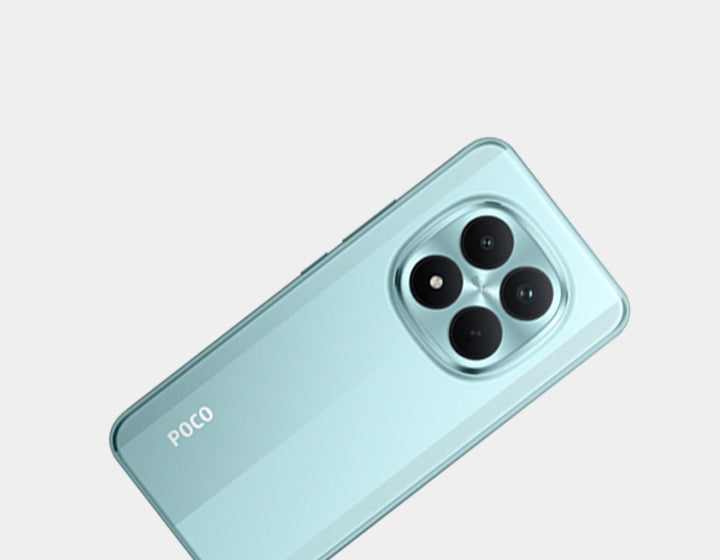
Xiaomi Poco M8 Pro 5G Dual SIM 512GB ROM 12GB RAM GSM Unlocked - Green
Xiaomi Poco M8 Pro 5G Dual SIM 512GB ROM 12GB RAM GSM Unlocked - Green
SKU: SKU:X-POCO-M8PRO-5G-12-512-GN
Out of stock
 Ships Today from New York
Couldn't load pickup availability
📞 Need Help? Call Toll-Free: 1-844-CELLMAX
Free Premium Accessories Included — A $20 Value
Premium accessories included free with every phone purchase.


Will this phone work with my carrier?
Choose your country and carrier to check before ordering.
Thank you. We received your IMEI verification request. Once verified and approved, MyWorldPhone will email you the actual IMEI so you can verify it directly with your carrier. Please allow 24–48 hours for processing on weekdays only. Weekend requests will be reviewed on the next business day.


🛒 Recommended Accessories


-
MYWORLDPHONE CUSTOMER REVIEWS
4.8
OUT OF 5
⭐⭐⭐⭐⭐Based on reviews
Excellent
Why Buy from Us
-

25+ Years of Experience in Business
-

Same-Day Shipping from New York
-

100% Genuine Unlocked Devices
-

Huge Selection of Smartphones
-

Free Shipping


MyWorldPhone.com
POCO M8 Pro 5G AI
All Power. All Play. Green.
Built for long battery life, smooth performance, and immersive display experience.
6500mAh Massive Battery
Long-lasting power with advanced silicon-carbon technology for extended usage.
100W HyperCharge
Rapid charging ensures you're back to full power in minutes.
6.83" CrystalRes AMOLED
Stunning clarity, vibrant colors, and excellent brightness in all lighting conditions.
144Hz Ultra-Smooth Display
Fluid scrolling and enhanced responsiveness for gaming and everyday use.
3840Hz PWM Eye Comfort
Flicker-free viewing reduces eye strain during long screen sessions.
Snapdragon 7s Gen 4
Efficient 4nm processor delivers fast performance and smooth multitasking.
LiquidCool IceLoop System
Advanced cooling keeps the device stable under heavy usage and gaming.
50MP AI Camera
Capture vibrant and detailed photos with cinematic dynamic range.
32MP Front Camera
High-quality selfies with enhanced detail and clarity.
Premium Curved Design
Sleek curved body with Gorilla Glass Victus 2 for durability and style.
Water & Dust Resistance
Designed to handle everyday environments with added protection.
5G + NFC + Dual SIM
Stay connected with fast 5G, NFC support, and dual SIM flexibility.
GSM Unlocked Compatibility
Works with T-Mobile, Mint, Tello, and supported GSM networks worldwide.
Important Information
- Factory Unlocked Global Version
- Supports 5G / 4G LTE networks
- Compatible with GSM carriers only
- Not compatible with CDMA networks (Verizon, Sprint)
- Please confirm compatibility before purchase
Buy POCO M8 Pro Today
Available now at MyWorldPhone.com
| Network | Technology | GSM / HSPA / LTE / 5G |
|---|
| Launch | Announced | 2026, January 08 |
|---|---|---|
| Status | Available. Released 2026, January 08 |
| Body | Dimensions | 163.3 x 78.3 x 8.3 mm (6.43 x 3.08 x 0.33 in) |
|---|---|---|
| Weight | 206 g (7.27 oz) | |
| Build | Glass front (Gorilla Glass Victus 2), plastic frame, glass-fiber reinforced plastic back | |
| SIM | Nano-SIM + Nano-SIM | |
| IP68/IP69K dust tight and water resistant (high pressure water jets; immersible up to 1.5m for 30 min) IP68 dust tight and water resistant (immersible up to 1.5m for 30 min) - Europe only |
| Display | Type | AMOLED, 68B colors, 120Hz, 3840Hz PWM, HDR10+, Dolby Vision, 1800 nits (HBM), 3200 nits (peak) |
|---|---|---|
| Size | 6.83 inches, 114.5 cm2 (~89.6% screen-to-body ratio) | |
| Resolution | 1280 x 2772 pixels, 19.5:9 ratio (~447 ppi density) | |
| Protection | Corning Gorilla Glass Victus 2, Mohs level 6 |
| Platform | OS | Android 15, up to 4 major Android upgrades, HyperOS 2 |
|---|---|---|
| Chipset | Qualcomm SM7635-AC Snapdragon 7s Gen 4 (4 nm) | |
| CPU | Octa-core (1x2.7 GHz Cortex-A720 & 3x2.4 GHz Cortex-A720 & 4x1.8 GHz Cortex-A520) | |
| GPU | Adreno 810 |
| Memory | Card slot | No |
|---|---|---|
| Internal | 256GB 8GB RAM, 512GB 12GB RAM | |
| UFS 2.2 |
| Main Camera | Dual | 50 MP, f/1.6, 24mm (wide), 1/1.55", 1.0µm, dual pixel PDAF, OIS 8 MP, f/2.2, 15mm, 120˚ (ultrawide), 1/4.0", 1.12µm |
|---|---|---|
| Features | LED flash, HDR, panorama | |
| Video | Yes |
| Selfie camera | Single | 32 MP, f/2.2, (wide), 1/3.6" |
|---|---|---|
| Features | HDR, panorama | |
| Video | 1080p@30/60fps |
| Sound | Loudspeaker | Yes, with stereo speakers (with Dolby Atmos) |
|---|---|---|
| 3.5mm jack | No | |
| 24-bit/192kHz Hi-Res & Hi-Res wireless audio |
| Comms | WLAN | Wi-Fi 802.11 a/b/g/n/ac/6 or 6e, dual-band, Wi-Fi Direct |
|---|---|---|
| Bluetooth | 5.4, A2DP, LE | |
| Positioning | GPS, GALILEO, GLONASS, QZSS, BDS | |
| NFC | Yes (market/region dependent) | |
| Infrared port | Yes | |
| Radio | No | |
| USB | USB Type-C 2.0, OTG |
| Features | Sensors | Fingerprint (under display, optical), accelerometer, gyro, compass, proximity |
|---|
| Battery | Type | Si/C Li-Ion 6500 mAh |
|---|---|---|
| Charging | 100W wired, 100% in 40 min 22.5W reverse wired |
| Misc | Colors | Black, Green, Silver |
|---|---|---|
| Models | 2510EPC8BG |
| Our Tests | Performance | AnTuTu: 817222 (v10) GeekBench: 3245 (v6) 3DMark: 1110 (Wild Life Extreme) |
|---|---|---|
| Display | 1435 nits max brightness (measured) | |
| Loudspeaker | -19.5 LUFS (Excellent) | |
| Battery |
Active use score 16:11h
|
| EU LABEL | Energy | Class B |
|---|---|---|
| Battery | 60:47h endurance, 1000 cycles | |
| Free fall | Class A (270 falls) | |
| Repairability | Class C |
| Warranty | No Warranty |
|---|
| 1pcs | XIAOMI POCO-M8 Pro 5G |
| 1pcs | Battery. |
| 1pcs | Home Charger. |
| 1pcs | Headphone. |
| 1pcs | Data Cable. |
| 1pcs | User Manual. |
1. Which exact POCO M8 Pro is this?
This listing is the POCO M8 Pro 5G with 12GB RAM, 512GB storage and Green finish. Xiaomi officially lists 8GB+256GB and 12GB+512GB configurations.
2. Is Green an official color?
Yes. Xiaomi’s official global colors are Black, Silver and Green.
3. Should the color be renamed Mint Green?
No. For the M8 Pro, Xiaomi itself uses the official name Green.
4. Is this a 5G phone?
Yes. It supports 5G SA and NSA, along with LTE, WCDMA and GSM.
5. Does it support Dual SIM?
Yes. The global model supports Nano-SIM + Nano-SIM.
6. Does it support eSIM?
No. Xiaomi explicitly says the M8 Pro 5G does not support eSIM.
7. Does it have an EID?
No. Xiaomi states there is no EID because eSIM is not supported.
8. Does it support microSD?
No. There is no SD-card expansion.
9. What operating system does the first production batch use?
Xiaomi’s technical FAQ says the first batch runs Xiaomi HyperOS 2.2 based on Android 15.
10. What are the official dimensions?
Xiaomi’s primary global specification lists approximately 163.34 × 78.31 × 8.31mm and 205.9g. Its technical FAQ gives slightly different lab measurements, so the primary spec sheet is the cleaner retail value.
Snapdragon 7s Gen 4
11. Which processor powers the M8 Pro?
It uses the Qualcomm Snapdragon 7s Gen 4 Mobile Platform.
12. What manufacturing process does it use?
It is manufactured using a 4nm process.
13. How many CPU cores are there?
Eight.
14. What is the maximum CPU speed?
Up to approximately 2.7GHz.
15. What CPU architecture does Xiaomi specify?
Xiaomi’s technical FAQ identifies the CPU architecture as Arm V9, 64-bit.
16. What is the actual CPU-core arrangement?
POCO’s official product page lists 1× Cortex-A720 + 3× Cortex-A720 + 4× Cortex-A520.
17. What is the fastest core used for?
The fastest Cortex-A720 core handles demanding foreground workloads while lower-frequency cores balance sustained performance and efficiency.
18. Which GPU does it use?
Xiaomi’s official technical documentation identifies the GPU as Adreno.
19. Should the page specifically say Adreno 810?
I would not use “Adreno 810” unless Xiaomi documents that exact GPU designation for the retail variant. Xiaomi’s current global spec and FAQ simply say Adreno GPU / Adreno.
20. Is this a flagship Snapdragon chipset?
No. It is a capable upper-midrange Snapdragon platform rather than Qualcomm’s top 8-series flagship platform.
Gaming & Cooling
21. Does the M8 Pro support Game Turbo?
Yes.
22. Does it support WildBoost?
No. Xiaomi specifically says Wild Boost is not supported.
23. Can Mobile Legends run at high frame rates?
Xiaomi lists MLBB up to 120fps under supported game conditions.
24. What about League of Legends Mobile?
Xiaomi lists up to 90fps, cloud-controlled.
25. What about PUBG?
Xiaomi lists up to 60fps with HDR.
26. Does it support game super resolution?
No.
27. Does it support game frame insertion?
No.
28. What cooling technology does the phone use?
It uses Xiaomi IceLoop / LiquidCool Technology.
29. How large is the IceLoop system?
POCO advertises a 5200mm² IceLoop system plus a 5954mm² mid-frame graphite area.
30. Can the phone still get warm?
Yes. Gaming, 100W charging, 5G, navigation and extended camera use can all generate noticeable heat.
RAM & Storage
31. How much RAM does this exact SKU have?
12GB physical RAM.
32. What RAM technology does it use?
LPDDR4X.
33. Does it support Memory Extension?
Yes. Xiaomi supports storage-based virtual memory extension.
34. Is virtual memory the same as physical RAM?
No. It uses internal flash storage and is slower than physical LPDDR4X memory.
35. How much internal storage does this SKU have?
512GB.
36. What storage technology does it use?
UFS 2.2.
37. Why is UFS 2.2 relevant?
It determines internal-storage performance for application loading, file transfers, installations and other storage-heavy operations.
38. Is all 512GB available to the customer?
No. Xiaomi notes that the operating system and preinstalled applications use some of the advertised storage.
39. Can a microSD card be added later?
No.
40. Does Xiaomi support Storage Refresh?
Yes.
6.83-Inch CrystalRes AMOLED
41. How large is the screen?
6.83 inches.
42. What type of screen is it?
A flexible CrystalRes AMOLED display.
43. Is the screen curved?
Yes. Xiaomi’s technical FAQ explicitly describes it as a curved screen.
44. What is the native resolution?
2772 × 1280 pixels.
45. Is it a 1.5K display?
Yes. Xiaomi officially markets the resolution as 1.5K.
46. What is the pixel density?
Approximately 447 PPI.
47. What is the correct screen-to-body ratio?
Xiaomi’s detailed FAQ gives 93.24%.
48. What is the maximum refresh rate?
120Hz.
49. Does the phone have a 144Hz display?
No. Xiaomi’s official maximum is 120Hz, so any 144Hz claim for the M8 Pro should be removed.
50. What is the regular touch sampling rate?
Up to 480Hz.
51. What is the instantaneous gaming touch rate?
Up to 2560Hz under Game Turbo.
52. Is 2560Hz the refresh rate?
No. 120Hz is display refresh; 2560Hz is instantaneous touch sampling.
Brightness, Color & HDR
53. What is the maximum local peak brightness?
3200 nits.
54. What is HBM brightness?
Approximately 1800 nits.
55. What is the typical manual maximum?
Xiaomi’s FAQ lists approximately 600 nits typical.
56. What is Sunlight Mode brightness?
Approximately 800 nits.
57. What is minimum brightness?
Approximately 2 nits.
58. How many colors can it display?
The panel supports 12-bit color and approximately 68.7 billion colors.
59. Does it support DCI-P3?
Yes—Xiaomi specifies 100% DCI-P3.
60. What is the contrast ratio?
Approximately 8,000,000:1.
61. Does it support HDR10+?
Yes.
62. Does it support Dolby Vision?
Yes.
PWM & Eye Comfort
63. Does the screen use 3840Hz PWM?
Yes. At lower brightness, it uses 3840Hz ultra-high-frequency PWM dimming.
64. What happens at higher brightness?
Xiaomi uses DC dimming at higher brightness levels.
65. Does POCO specify a brightness threshold?
Its consumer product page describes 3840Hz PWM below 80 nits and DC dimming above 80 nits.
66. Does it support TÜV eye-care certifications?
Yes. Xiaomi lists low-blue-light, circadian-friendly and flicker-free TÜV Rheinland certifications.
67. Does it support Wet Touch?
Yes. Wet Touch 2.0 is supported.
68. Does it support Always-On Display?
Yes.
69. What glass protects the display?
Corning Gorilla Glass Victus 2.
70. Does Victus 2 make the screen unbreakable?
No. It improves drop and scratch resistance but does not make a smartphone immune to damage.
50MP Main Camera
71. What is the correct main-camera resolution?
50MP.
72. What image sensor platform does POCO market?
The main camera uses Light Fusion 800.
73. How large is the main sensor?
Approximately 1/1.55 inch.
74. What is the main-camera aperture?
f/1.6.
75. What is the native pixel size?
Xiaomi’s technical FAQ gives approximately 1.008μm.
76. What does 2.0μm 4-in-1 Super Pixel mean?
POCO advertises an effective 2.0μm output pixel when four photosites are combined in supported shooting modes.
77. Does the main camera have OIS?
Yes.
78. Does it also use EIS?
Yes. Xiaomi says the main camera supports EIS + OIS for photos/video.
79. Does the main camera autofocus?
Yes.
80. What is the main camera field of view?
Approximately 81.8°.
Ultrawide & Zoom
81. What is the second rear camera?
An 8MP ultrawide.
82. How large is the ultrawide sensor?
Approximately 1/4 inch.
83. What is its aperture?
f/2.2.
84. What is its pixel size?
Approximately 1.12μm.
85. What is the ultrawide field of view?
Approximately 112°.
86. Does it autofocus?
No. Xiaomi lists the ultrawide as fixed focus.
87. Does the phone have a telephoto camera?
No. The official rear system is 50MP main + 8MP ultrawide.
88. What is the photo zoom range?
Approximately 0.6× to 20×.
89. Which zoom positions are actually optical?
Xiaomi says 0.6× and 1× are optical/native camera positions; other magnifications are digital.
Front Camera & Video
90. What is the correct front-camera resolution?
32MP, not 16MP.
91. Which selfie sensor does it use?
Xiaomi identifies the OmniVision OV32D.
92. What is the front sensor size?
Approximately 1/3.6 inch.
93. What is the front aperture?
f/2.2.
94. Does the selfie camera autofocus?
No. It uses fixed focus.
95. Does the selfie camera support EIS?
Yes, for video recording.
96. What is the maximum rear-video resolution?
The main camera records up to 4K at 30fps; 1080p supports 30/60fps.
97. Can the front camera record 4K?
No. It records up to 1080p at 60fps.
Battery, Charging & Connectivity
98. What battery and charging system does it use?
The primary global specification lists a 6500mAh typical silicon-carbon battery, 100W HyperCharge and up to 22.5W wired reverse charging. POCO states about 40 minutes to full charge under its defined laboratory conditions and says capacity retention remains at least 80% after 1,600 complete cycles in its internal testing.
One official-document inconsistency is worth noting: Xiaomi’s detailed FAQ appears to reverse its rated/typical battery figures, calling 6500mAh rated and 6330mAh typical. For retail copy, I would follow the primary global specification and official product page: 6500mAh typical.
99. Does the POCO M8 Pro support wireless charging?
No. It also does not support reverse wireless charging. It does support up to 22.5W wired reverse charging.
100. What other major features should buyers know?
The M8 Pro supports Wi-Fi 6/6E where regionally available, 2×2 MIMO, Bluetooth 5.4, aptX/aptX HD/aptX Adaptive/LDAC/LHDC codecs, NFC, IR blaster, USB-C 2.0, OTG, no DisplayPort Alt Mode, in-screen optical fingerprint recognition, 2D AI face unlock, symmetrical stereo speakers, Dolby Atmos, Hi-Res audio, GPS/Galileo/GLONASS/BeiDou/QZSS, and IP66/IP68/IP69/IP69K protection with regional certification differences.