


Samsung
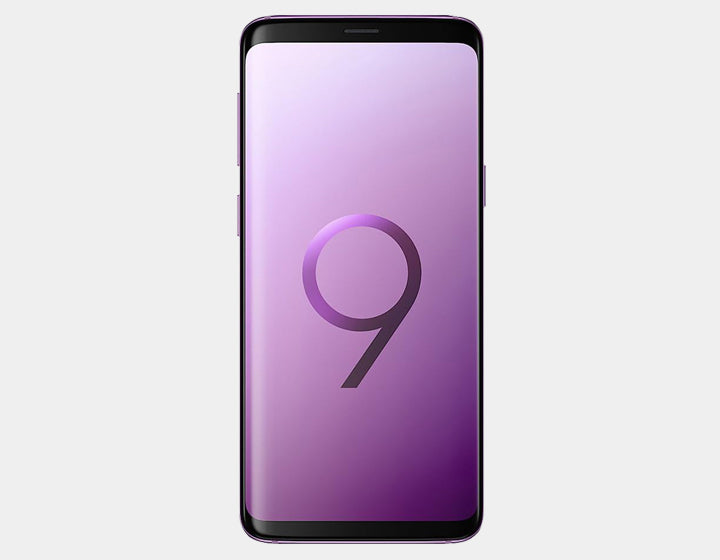
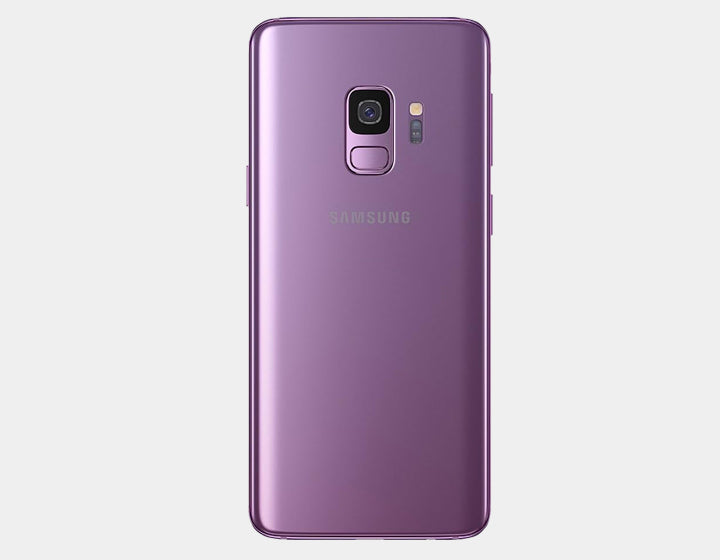
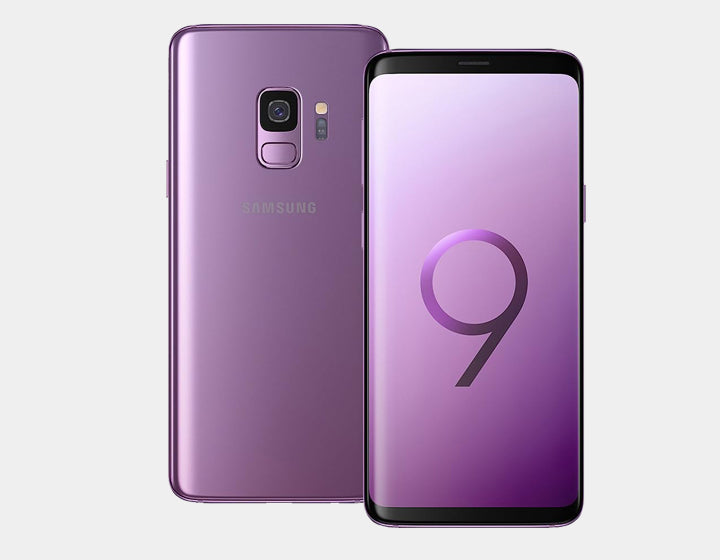
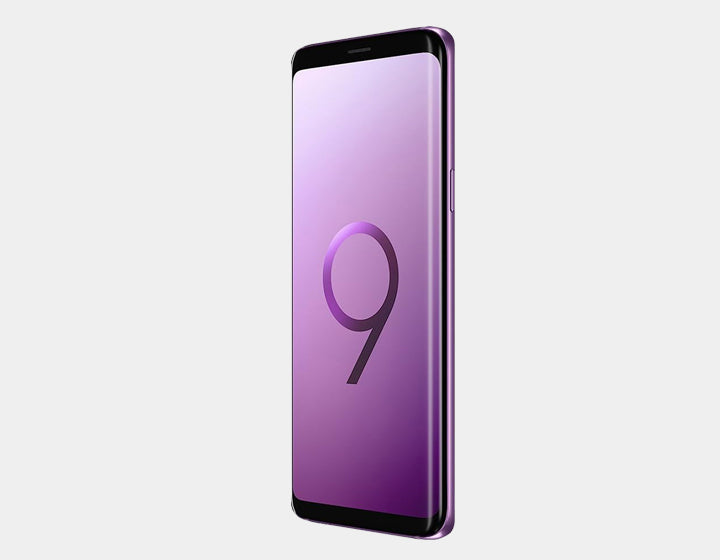
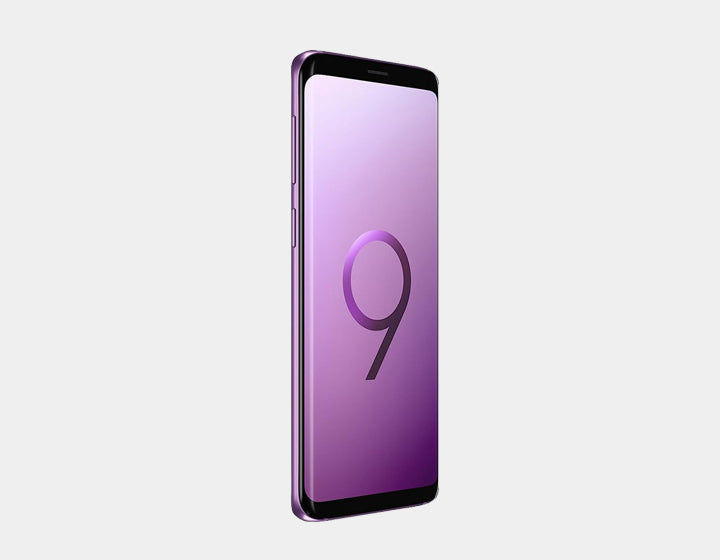
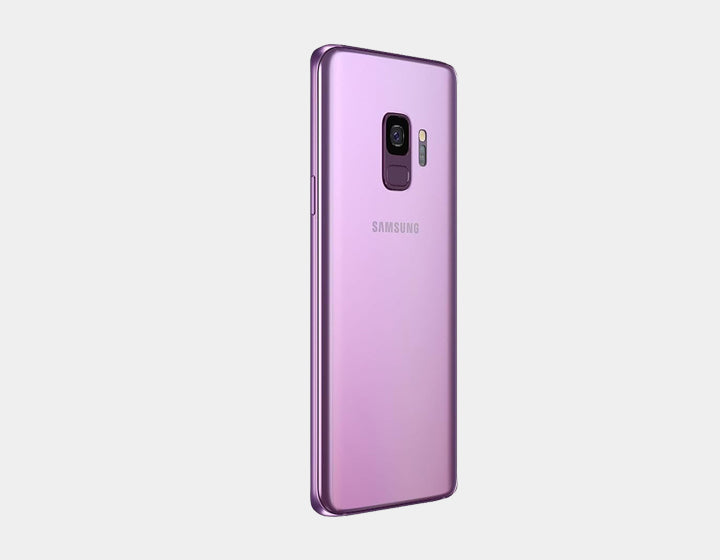
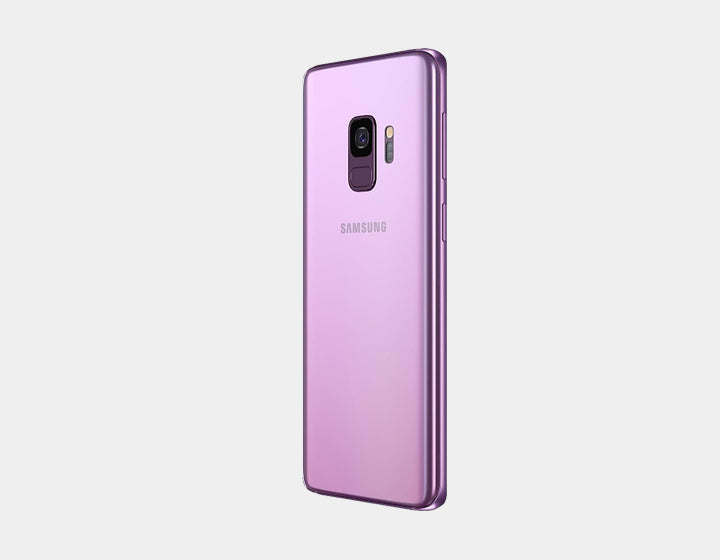
Samsung Galaxy S9 G960F DS 64GB ROM 4GB RAM GSM Unlocked - Purple
Samsung Galaxy S9 G960F DS 64GB ROM 4GB RAM GSM Unlocked - Purple
SKU: SKU:SAM-G960F-DS-64GB-4GB-PR
Low stock: 2 left
 Ships Today from New York
📞 Need Help? Call Toll-Free: 1-844-CELLMAX
Couldn't load pickup availability
Free Premium Accessories Included — A $20 Value
Premium accessories included free with every phone purchase.


🛒 Recommended Accessories


-
MYWORLDPHONE CUSTOMER REVIEWS
4.8
OUT OF 5
⭐⭐⭐⭐⭐Based on reviews
Excellent
Why Buy from Us
-

25+ Years of Experience in Business
-

Same-Day Shipping from New York
-

100% Genuine Unlocked Devices
-

Huge Selection of Smartphones
-

Free Shipping


MyWorldPhone.com
Samsung Galaxy S9
Classic Performance. Dual Aperture Camera. Purple.
A stylish and reliable smartphone with innovative camera features and smooth everyday performance.
Dual Aperture Camera
Automatically adapts between F1.5 and F2.4 for excellent photos day or night.
Low Light Photography
Capture brighter, clearer photos even in dark environments.
Super Slow-Mo Video
Turn everyday moments into dramatic slow-motion clips and shareable GIFs.
AR Emoji
Create a fun augmented reality version of yourself using a selfie.
5.8" Infinity Display
Enjoy immersive viewing on a compact, vibrant display.
Reliable Everyday Performance
Smooth performance for browsing, apps, entertainment, and daily tasks.
Dual SIM LTE
Flexible connectivity with dual SIM support and global LTE compatibility.
GSM Unlocked
Works with T-Mobile, Mint, Tello, and GSM carriers worldwide.
Important Information
- Factory Unlocked International Version
- Supports 4G LTE networks
- Compatible with GSM carriers only
- Not compatible with CDMA networks (Verizon, Sprint)
- No Manufacturer Warranty
- Please confirm compatibility before purchase
Buy Galaxy S9 Today
Available now at MyWorldPhone.com
Versions: G960F (Europe, Global Single-SIM); G960F/DS (Europe, Global Dual-SIM); G960U (USA); G960W (Canada); G9600 (China, LATAM)
| NETWORK | Technology | GSM / CDMA / HSPA / EVDO / LTE |
|---|---|---|
| 2G bands | GSM 850 / 900 / 1800 / 1900 - SIM 1 & SIM 2 (dual-SIM model only) | |
| CDMA 800 / 1900 - USA | ||
| 3G bands | HSDPA 850 / 900 / 1700(AWS) / 1900 / 2100 - Global, USA | |
| CDMA2000 1xEV-DO - USA | ||
| 4G bands | LTE band 1(2100), 2(1900), 3(1800), 4(1700/2100), 5(850), 7(2600), 8(900), 12(700), 13(700), 17(700), 18(800), 19(800), 20(800), 25(1900), 26(850), 28(700), 32(1500), 38(2600), 39(1900), 40(2300), 41(2500), 66(1700/2100) - Global | |
| LTE band 1(2100), 2(1900), 3(1800), 4(1700/2100), 5(850), 7(2600), 8(900), 12(700), 13(700), 14(700), 17(700), 18(800), 19(800), 20(800), 25(1900), 26(850), 28(700), 29(700), 30(2300), 38(2600), 39(1900), 40(2300), 41(2500), 46, 66(1700/2100), 71(600) - USA | ||
| Speed | HSPA 42.2/5.76 Mbps, LTE-A (6CA) Cat18 1200/200 Mbps |
| LAUNCH | Announced | 2018, February |
|---|---|---|
| Status | Available. Released 2018, March |
| BODY | Dimensions | 147.7 x 68.7 x 8.5 mm (5.81 x 2.70 x 0.33 in) |
|---|---|---|
| Weight | 163 g (5.75 oz) | |
| Build | Front/back glass (Gorilla Glass 5), aluminum frame | |
| SIM | Single SIM (Nano-SIM) or Hybrid Dual SIM (Nano-SIM, dual stand-by) | |
| Samsung Pay (Visa, MasterCard certified) IP68 dust/water proof (up to 1.5m for 30 mins) |
| DISPLAY | Type | Super AMOLED capacitive touchscreen, 16M colors |
|---|---|---|
| Size | 5.8 inches, 84.8 cm2 (~83.6% screen-to-body ratio) | |
| Resolution | 1440 x 2960 pixels, 18.5:9 ratio (~570 ppi density) | |
| Protection | Corning Gorilla Glass 5 | |
| HDR10 3D Touch (home button only) Always-on display |
| PLATFORM | OS | Android 8.0 (Oreo), upgradable to Android 9.0 (Pie) |
|---|---|---|
| Chipset | Exynos 9810 (10 nm) - EMEA Qualcomm SDM845 Snapdragon 845 (10 nm) - USA/LATAM, China |
|
| CPU | Octa-core (4x2.7 GHz Mongoose M3 & 4x1.8 GHz Cortex-A55) - EMEA Octa-core (4x2.8 GHz Kryo 385 Gold & 4x1.7 GHz Kryo 385 Silver) - USA/LATAM, China |
|
| GPU | Mali-G72 MP18 - EMEA Adreno 630 - USA/LATAM, China |
| MEMORY | Card slot | microSD, up to 1 TB (uses shared SIM slot) - dual SIM model only |
|---|---|---|
| Internal | 64/128/256 GB, 4 GB RAM |
| MAIN CAMERA | Single | 12 MP, f/1.5-2.4, 26mm (wide), 1/2.55", 1.4µm, dual pixel PDAF, OIS |
|---|---|---|
| Features | LED flash, auto-HDR, panorama | |
| Video | 2160p@60fps, 1080p@240fps, 720p@960fps, HDR, dual-video rec. |
| SELFIE CAMERA | Single | 8 MP, f/1.7, 25mm (wide), 1/3.6", 1.22µm, AF |
|---|---|---|
| Features | Dual video call, Auto-HDR | |
| Video | 1440p@30fps |
| SOUND | Loudspeaker | Yes, with stereo speakers |
|---|---|---|
| 3.5mm jack | Yes | |
| 32-bit/384kHz audio Active noise cancellation with dedicated mic |
| COMMS | WLAN | Wi-Fi 802.11 a/b/g/n/ac, dual-band, Wi-Fi Direct, hotspot |
|---|---|---|
| Bluetooth | 5.0, A2DP, LE, aptX | |
| GPS | Yes, with A-GPS, GLONASS, BDS, GALILEO | |
| NFC | Yes | |
| Radio | FM radio (USA & Canada only) | |
| USB | 3.1, Type-C 1.0 reversible connector |
| FEATURES | Sensors | Iris scanner, fingerprint (rear-mounted), accelerometer, gyro, proximity, compass, barometer, heart rate, SpO2 |
|---|---|---|
| Samsung DeX (desktop experience support) ANT+ Bixby natural language commands and dictation |
| BATTERY | Non-removable Li-Ion 3000 mAh battery (11.55 Wh) | |
|---|---|---|
| Charging | Fast battery charging 15W (Quick Charge 2.0) Qi/PMA wireless charging (market dependent) |
| MISC | Colors | Midnight Black, Coral Blue, Titanium Gray, Lilac Purple, Burgundy Red, Sunrise Gold, Ice Blue |
|---|---|---|
| Models | SM-G960F, SM-G960, SM-G960F, SM-G960U, SM-G960W, SM-G9600, SM-G960U1, SM-G960N |
| TESTS | Performance | Basemark OS II: 3329 / Basemark OS II 2.0: 3382 Basemark X: 42645 |
|---|---|---|
| Display | Contrast ratio: Infinite (nominal), 4.630 (sunlight) | |
| Camera | Photo / Video | |
| Loudspeaker | Voice 68dB / Noise 74dB / Ring 81dB | |
| Audio quality | Noise -93.4dB / Crosstalk -93.9dB | |
| Battery life |
Endurance rating 78h
|
| Warranty | No Warranty |
|---|
| UPC/EAN | 8801643195328 |
|---|
| 1pcs | Samsung Galaxy S9 G960F |
| 1pcs | Battery. |
| 1pcs | Home Charger. |
| 1pcs | Headphone. |
| 1pcs | Data Cable. |
| 1pcs | User Manual. |
1. Which exact Galaxy S9 is this?
This is the Samsung Galaxy S9 SM-G960F/DS, an international Hybrid Dual-SIM variant with 4GB RAM and 64GB storage. Samsung UK specifically identifies SM-G960F/DS as the Galaxy S9 Hybrid SIM model.
2. Is SM-G960F/DS different from SM-G960U?
Yes. SM-G960F/DS is the international Exynos-based Dual-SIM model, while SM-G960U is a U.S. Snapdragon/carrier-family model. Your current table incorrectly mixes specifications from both families.
3. What is the correct official color?
Lilac Purple. Samsung used that exact name at launch.
4. Should the title say just “Purple”?
I would change it to Lilac Purple for manufacturer accuracy.
5. Is 64GB an official Galaxy S9 capacity?
Yes. Samsung offered the S9 with 64GB, and Samsung regional pages also documented larger capacities.
6. How much RAM does this version have?
4GB LPDDR4X.
7. Is the 4GB RAM expandable?
Not physically. Apps may use storage for caching, but the phone contains 4GB physical RAM.
8. Does the S9 support a microSD card?
Yes.
9. What microSD capacity did Samsung officially advertise?
Samsung’s official Galaxy S9 specification states up to 400GB.
10. Is the microSD slot dedicated on SM-G960F/DS?
No. This is a Hybrid SIM model: the second tray position is shared between SIM 2 and microSD.
Exynos 9810 & performance
11. Which processor does this international model use?
Samsung Exynos 9810. Samsung Semiconductor explicitly lists Galaxy S9 among Exynos 9810 devices.
12. What manufacturing process is used?
10nm FinFET.
13. Is the processor 64-bit?
Yes. Samsung’s Galaxy S9 launch specifications describe a 10nm 64-bit octa-core processor.
14. How many CPU cores are there?
Eight.
15. What CPU architecture does Exynos 9810 use?
Samsung Semiconductor documents four Samsung custom CPU cores plus four Cortex-A55 efficiency cores.
16. What maximum CPU speed applies to the S9 Exynos implementation?
Samsung Galaxy S9 regional materials specify a maximum around 2.7GHz for the Exynos version.
17. Which GPU does it use?
ARM Mali-G72 MP18.
18. Is Mali-G72 MP18 manufacturer-confirmed?
Yes. Samsung Semiconductor lists it directly for Exynos 9810.
19. What memory technology does the Exynos platform support?
LPDDR4X, matching the Galaxy S9’s 4GB implementation.
20. What modem performance does Exynos 9810 provide?
Samsung documents an integrated LTE Cat.18 modem with up to 1.2Gbps theoretical downlink capability. Actual network speeds are much lower and carrier-dependent.
Display
21. How large is the Galaxy S9 display?
5.8 inches measured as a full rectangle.
22. What display technology does it use?
Dual-edge Super AMOLED.
23. What is the native resolution?
2960 × 1440 Quad HD+.
24. What is the pixel density?
Approximately 570 PPI.
25. What is the aspect ratio?
Approximately 18.5:9.
26. Is the display curved?
Yes. The S9 uses Samsung’s dual-edge Infinity Display.
27. What glass protects the screen?
Corning Gorilla Glass 5. Samsung specifically discussed reinforced Gorilla Glass 5 construction on the S9 generation.
28. Does the display support HDR?
Yes. The Galaxy S9 was certified for Mobile HDR Premium and supports HDR content.
29. Does it have Always-On Display?
Yes.
30. Does Samsung publish an official screen-to-body percentage?
Samsung’s primary S9 specification does not use the ~83.6% number currently on your page. I would remove that percentage rather than presenting third-party calculated data as a Samsung specification.
Display quality & controls
31. Does the display support adaptive display modes?
Yes. Samsung provided several calibrated screen modes, including Adaptive Display.
32. What peak brightness did independent DisplayMate testing cited by Samsung measure?
Samsung Newsroom reported a DisplayMate measurement of approximately 1,130 nits under its test methodology. This should be labelled as an independent measurement, not a normal sustained-brightness specification.
33. Does it support DCI-P3 color?
Yes. Samsung’s DisplayMate coverage documented wide-gamut performance extending through DCI-P3.
34. Is this a 120Hz display?
No. The Galaxy S9 predates Samsung’s mainstream high-refresh-rate flagships.
35. Is it an LTPO display?
No.
36. Does it support HDR10+?
The manufacturer material for this generation primarily uses Mobile HDR Premium/HDR terminology. I would avoid adding modern HDR10+ branding without a specific Samsung S9 source.
37. Is there a physical home button?
No traditional front-mounted physical button; the S9 uses onscreen navigation with a pressure-sensitive home area.
38. Does it have Edge Panels?
Yes. Samsung officially lists Edge Panels and Edge Lighting features.
39. Can Always-On Display show notifications?
Yes. Samsung’s S9 specification lists clock, calendar, notifications, images and other AOD content.
40. Is QHD+ always enabled by default?
Resolution can be adjusted in software; the panel itself is physically 2960 × 1440.
Rear camera
41. How many rear cameras does the standard Galaxy S9 have?
ONE. This is extremely important.
42. Is the current MyWorldPhone ALT text saying “dual camera module” correct?
No. Your page has two ALT descriptions calling the S9 a dual-camera phone. The regular S9 uses one 12MP rear camera; the S9+ is the dual-camera model.
43. What is the rear-camera resolution?
12MP. Your top product metafield is correct.
44. What sensor size does Samsung specify?
1/2.55 inch.
45. What is the native pixel size?
1.4µm.
46. What autofocus technology does it use?
Super Speed Dual Pixel autofocus.
47. Does the camera have OIS?
Yes.
48. What is Dual Aperture?
The physical aperture can switch between f/1.5 and f/2.4 depending on lighting conditions.
49. Is it a continuously variable aperture?
No. It switches between two physical aperture positions.
50. What is the approximate camera field of view?
Samsung lists approximately 77° for the rear camera.
Camera functions
51. Does the Galaxy S9 have a telephoto camera?
No. That feature belonged to the S9+, not the standard S9.
52. Does it have an ultrawide camera?
No.
53. What maximum digital zoom does Samsung specify?
Up to 8× digital zoom.
54. Does it support Pro mode?
Yes.
55. Can Pro mode save RAW photos?
Samsung’s S9 manual supports RAW/DNG capture in Pro mode.
56. Does it support HDR photos?
Yes.
57. Does it support panorama?
Yes.
58. Does it support AR Emoji?
Yes. AR Emoji was a major Galaxy S9 launch feature.
59. Does it support Motion Photo?
Yes.
60. Does the rear camera have a flash?
Yes, LED flash.
Video
61. What is the maximum normal recording resolution?
4K UHD at up to 60fps.
62. Does it support 4K30?
Yes.
63. Does it support 1080p60?
Yes.
64. Does it support 1080p slow motion?
Yes, up to 240fps.
65. What is Super Slow-mo?
The Galaxy S9 supports 720p recording at 960fps for short Super Slow-mo sequences.
66. Does it support HEVC video?
Yes. Samsung’s manual includes High Efficiency Video Codec recording support.
67. Does it have video stabilization?
Yes, Samsung documents video digital stabilization in addition to OIS on the rear camera.
68. Can it take still photos while recording 4K?
Samsung’s original specification says it can capture approximately 9MP stills while recording 4K video.
69. Does it support Hyperlapse?
Yes.
70. Does the regular S9 have 2× optical zoom video?
No. That is an S9+ feature.
Front camera
71. What is the selfie-camera resolution?
8MP. Your current top field is correct.
72. What is the front-camera aperture?
f/1.7.
73. Does the selfie camera autofocus?
Yes. That is a useful differentiator: Samsung specifies 8MP AF.
74. What is the front sensor size?
1/3.6 inch.
75. What is the front pixel size?
1.22µm.
76. What is the selfie field of view?
Approximately 80°.
77. Does it support portrait-style selfies?
Yes, Samsung included Selfie Focus.
78. Does the front camera support HDR?
Yes.
79. Does it support Wide Selfie?
Yes.
80. What is the front-camera video maximum?
Samsung’s S9 generation documentation supports high-resolution front video; your current 1440p30 specification is reasonable, though I would prioritize Samsung’s core 8MP AF/f1.7 specifications on the retail page.
Battery & charging
81. What is the battery capacity?
3000mAh.
82. Is the battery removable?
No.
83. Does it support fast wired charging?
Yes. Samsung lists fast wired charging and compatibility with Quick Charge 2.0 in its launch materials.
84. Does it support wireless charging?
Yes.
85. Which wireless charging standards are supported?
Samsung specifies compatibility with WPC/Qi and PMA wireless charging.
86. Can the 15W wireless pad on your page remain?
Yes, if it is Qi-compatible. The S9 supports wireless charging. However, do not imply the phone itself necessarily receives a full 15W; it will negotiate at the maximum rate supported by the handset and charger.
87. Does it support reverse wireless charging?
No. Samsung introduced Wireless PowerShare on later Galaxy generations.
88. Does it support USB Power Delivery fast charging?
Samsung’s original S9 documentation emphasizes Adaptive Fast Charging/QC 2.0, not modern high-wattage USB-PD marketing. I would not claim PD fast charging unless separately verified.
89. Is a 100W charger useful for the S9?
It may work as a multi-device charger if compatible, but the S9 will draw only its supported charging rate.
90. Is a 60W cable necessary?
No. The S9’s charging demand is far below 60W.
SIM, connectivity, audio & software
91. Is SM-G960F/DS Dual SIM?
Yes. Samsung identifies it as the Hybrid SIM Galaxy S9.
92. Can the phone use two SIMs and microSD simultaneously?
No. SIM 2 and microSD share a tray position.
93. Does it support eSIM?
No. Samsung’s current official eSIM-supported-device list begins with later Galaxy S generations and does not include the S9.
94. Does it support 5G?
No. This is a 4G LTE device.
95. What Wi-Fi does it support?
Wi-Fi 802.11 a/b/g/n/ac on 2.4GHz and 5GHz, including MU-MIMO.
96. What Bluetooth version does it have?
Bluetooth 5.0.
97. Does it support NFC?
Yes.
98. What USB standard does it use?
USB Type-C with USB 3.1 Gen 1.
99. Does it support wired video output?
Yes. Samsung officially documents DisplayPort over USB-C, including HDMI-adapter video output and DeX support. This is important because your current generic “MHL: No” row could incorrectly make customers think the phone cannot output video.
100. What is the newest Android generation Samsung officially documented for this exact model?
The Galaxy S9 launched with Android 8.0 Oreo, but Samsung later published an Android 10 user manual for the exact SM-G960F/DS, so your current “upgradable to Android 9” line is outdated.
The device is an international unlocked LTE model, but unlocked status does not guarantee activation or full feature support with every current carrier. Compatibility depends on the exact regional firmware, LTE bands, IMEI eligibility, VoLTE/IMS provisioning, carrier certification and current carrier policy. Your existing “GSM only / not CDMA” framing is outdated because modern U.S. networks rely on LTE/VoLTE provisioning rather than the historical GSM-versus-CDMA distinction.