


Sony
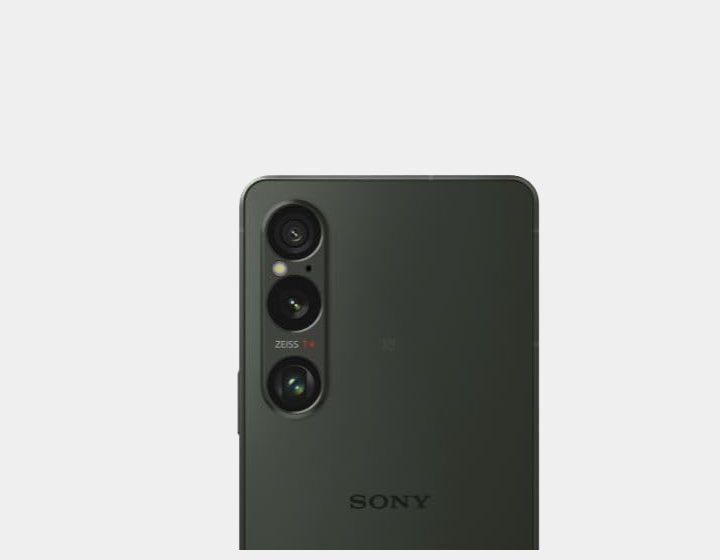
Sony Xperia 1 VI XQ-EC72 5G Dual SIM 256GB ROM 12GB RAM GSM Unlocked - Green
Sony Xperia 1 VI XQ-EC72 5G Dual SIM 256GB ROM 12GB RAM GSM Unlocked - Green
SKU: SKU:SON-XQ-EC72-5G-12-256-GN
Out of stock
 Ships Today from New York
📞 Need Help? Call Toll-Free: 1-844-CELLMAX
Couldn't load pickup availability
Free Premium Accessories Included — A $20 Value
Premium accessories included free with every phone purchase.


🛒 Recommended Accessories


-
MYWORLDPHONE CUSTOMER REVIEWS
4.8
OUT OF 5
⭐⭐⭐⭐⭐Based on reviews
Excellent
Why Buy from Us
-

25+ Years of Experience in Business
-

Same-Day Shipping from New York
-

100% Genuine Unlocked Devices
-

Huge Selection of Smartphones
-

Free Shipping


MyWorldPhone.com
Sony Xperia 1 VI 5G
Pro Camera. Elite Performance. Khaki Green.
A complete flagship experience powered by Sony’s innovation in camera, display, audio, and gaming.
Advanced Sony Camera System
Capture stunning detail with a 48MP camera, dual pixel autofocus, and optical image stabilization.
85–170mm Optical Zoom
Advanced telephoto lens with macro capability lets you shoot distant and close subjects with precision.
Snapdragon 8 Gen 3 Power
Flagship-level performance for gaming, streaming, and multitasking without compromise.
6.5" Immersive Display
Sony display technology delivers rich colors, sharp detail, and an immersive viewing experience.
Signature Sony Audio
Enjoy premium sound quality powered by Sony’s industry-leading audio expertise.
5000mAh Battery Life
Long-lasting battery designed for up to two days of usage on a single charge.
12GB RAM + 256GB Storage
Smooth multitasking and ample storage for apps, games, and media.
Khaki Green Finish
Unique and stylish green finish offering a bold yet premium aesthetic.
5G + Global Unlocked
Works with GSM carriers like T-Mobile, Mint, Tello, and global networks (no CDMA support).
Important Information
- Factory Unlocked Global Version
- GSM Only (Not compatible with Verizon, Sprint, Boost, etc.)
- Supports 5G and 4G LTE networks
- No CDMA support
- Carrier compatibility may vary by region
Buy Sony Xperia 1 VI Today
Available now at MyWorldPhone.com
| NETWORK | Technology | GSM / HSPA / LTE / 5G |
|---|---|---|
| 2G bands | GSM 850 / 900 / 1800 / 1900 - SIM 1 & SIM 2 | |
| 3G bands | HSDPA 800 / 850 / 900 / 1700(AWS) / 1900 / 2100 | |
| 4G bands | 1, 2, 3, 4, 5, 7, 8, 12, 13, 17, 19, 20, 25, 26, 28, 29, 32, 34, 38, 39, 40, 41, 46, 66 - Europe | |
| 1, 2, 3, 4, 5, 7, 8, 12, 13, 17, 19, 20, 25, 26, 28, 29, 34, 38, 39, 40, 41, 46, 66 - Asia | ||
| 5G bands | 1, 3, 5, 7, 8, 20, 28, 38, 40, 41, 75, 77, 78 SA/NSA/Sub6 - Europe | |
| 1, 3, 5, 7, 8, 28, 38, 40, 41, 77, 78, 79 SA/NSA/Sub6 - Asia | ||
| Speed | HSPA, LTE, 5G |
| LAUNCH | Announced | 2024, May 15 |
|---|---|---|
| Status | Available. Released 2024, June 03 |
| BODY | Dimensions | 162 x 74 x 8.2 mm (6.38 x 2.91 x 0.32 in) |
|---|---|---|
| Weight | 192 g (6.77 oz) | |
| Build | Glass front (Gorilla Glass Victus 2), glass back (Gorilla Glass Victus), aluminum frame | |
| SIM | Nano-SIM and eSIM or Dual SIM (Nano-SIM, dual stand-by) | |
| IP65/IP68 dust/water resistant (up to 1.5m for 30 min) |
| DISPLAY | Type | LTPO OLED, 1B colors, 120Hz, HDR BT.2020 |
|---|---|---|
| Size | 6.5 inches, 103.7 cm2 (~86.5% screen-to-body ratio) | |
| Resolution | 1080 x 2340 pixels, 19.5:9 ratio (~396 ppi density) | |
| Protection | Corning Gorilla Glass Victus 2 |
| PLATFORM | OS | Android 14 |
|---|---|---|
| Chipset | Qualcomm SM8650-AB Snapdragon 8 Gen 3 (4 nm) | |
| CPU | Octa-core (1x3.3 GHz Cortex-X4 & 3x3.2 GHz Cortex-A720 & 2x3.0 GHz Cortex-A720 & 2x2.3 GHz Cortex-A520) | |
| GPU | Adreno 750 |
| MEMORY | Card slot | microSDXC (uses shared SIM slot) |
|---|---|---|
| Internal | 256GB 12GB RAM, 512GB 12GB RAM | |
| UFS |
| MAIN CAMERA | Triple | 48 MP, f/1.9, 24mm (wide), 1/1.35", 1.12µm, dual pixel PDAF, OIS 12 MP, f/2.3, 85mm (telephoto), f/3.5, 170mm (telephoto), 1/3.5", 1.0µm, dual pixel PDAF, 3.5x-7.1x continuous optical zoom, OIS, 4cm macro @ 120mm, no AF 12 MP, f/2.2, 16mm, 123˚ (ultrawide), 1/2.5", 1.4µm, dual pixel PDAF |
|---|---|---|
| Features | Zeiss optics, Zeiss T* lens coating, LED flash, panorama, HDR, eye tracking | |
| Video | 4K@24/25/30/60/120fps HDR, 1080p@30/60/120fps; 5-axis gyro-EIS, OIS |
| SELFIE CAMERA | Single | 12 MP, f/2.0, 24mm (wide), 1/2.9", 1.22µm |
|---|---|---|
| Features | HDR | |
| Video | 4K@30/60fps, 1080p@30/60fps, 5-axis gyro-EIS |
| SOUND | Loudspeaker | Yes, with stereo speakers |
|---|---|---|
| 3.5mm jack | Yes | |
| 24-bit/192kHz Hi-Res & Hi-Res wireless audio Dynamic vibration system Snapdragon Sound |
| COMMS | WLAN | Wi-Fi 802.11 a/b/g/n/ac/6e/7, tri-band, Wi-Fi Direct, DLNA (WI-FI 7 will be enabled with a SW update) |
|---|---|---|
| Bluetooth | 5.4, A2DP, LE Audio, aptX HD, aptX Adaptive, aptX Lossless | |
| Positioning | GPS (L1+L5), GLONASS, BDS, GALILEO, QZSS | |
| NFC | Yes | |
| Radio | No | |
| USB | USB Type-C 3.2, OTG, video output |
| FEATURES | Sensors | Fingerprint (side-mounted), accelerometer, gyro, proximity, barometer, compass, color spectrum |
|---|---|---|
| Native Sony Alpha camera support |
| BATTERY | Type | 5000 mAh, non-removable |
|---|---|---|
| Charging | 30W wired, PD3.0, PPS, 50% in 30 min (advertised) Wireless Reverse wireless |
| MISC | Colors | Black, Platinum silver, Khaki green, Scar red |
|---|---|---|
| Models | XQEC54EUKCB.GC, XQEC54EUKCG.GC, XQEC54EUKCS.GC, XQ-EC72 |
| TESTS | Performance | AnTuTu: 1612156 (v10) GeekBench: 6119 (v6) 3DMark Wild life: 16109 (offscreen 1440p) |
|---|---|---|
| Display | Contrast ratio: Infinite (nominal) | |
| Loudspeaker | -24.3 LUFS (Very good) | |
| Battery (new) |
Active use score 17:27h
|
| UPC/EAN | 4589771650332 |
|---|
| Warranty | No Warranty |
|---|
| 1pcs | Sony Xperia 1 VI XQ-EC72 5G |
| 1pcs | Battery. |
| 1pcs | Home Charger. |
| 1pcs | Headphone. |
| 1pcs | Data Cable. |
| 1pcs | User Manual. |
1. Which exact phone is this?
This is the Sony Xperia 1 VI XQ-EC72 5G with 12GB RAM, 256GB internal storage and Khaki Green finish.
2. Is XQ-EC72 an official Xperia 1 VI model?
Yes. Sony specifically identifies XQ-EC72 as the Asian Xperia 1 VI model.
3. Is Khaki Green the official color name?
Yes. Sony officially calls it Khaki Green, not simply Green.
4. Is 12GB RAM official?
Yes. Sony lists 12GB RAM for the 256GB Xperia 1 VI.
5. Is 256GB official for XQ-EC72?
Yes. Sony Hong Kong lists a 256GB Xperia 1 VI with XQ-EC72 model numbers.
6. Does Sony also make a 512GB Xperia 1 VI?
Yes, but that does not change this exact SKU. This page is specifically 256GB.
7. Is the 512GB statement currently in your description correct for this SKU?
No. Your exact live page says 512GB Storage and 12GB RAM in the description while the SKU, title and Sony specification are 256GB. That needs immediate correction.
8. What storage technology does Sony specify?
Sony specifies 256GB UFS storage. It does not state the UFS generation on its official Xperia 1 VI specification.
9. Does it support a microSD card?
Yes.
10. What is the official maximum microSD capacity?
Up to 1.5TB microSDXC.
SIM & XQ-EC72 regional differences
11. Does this exact XQ-EC72 support two physical SIM cards?
Yes. XQ-EC72 supports two Nano-SIM cards.
12. Does the XQ-EC72 support eSIM?
No. Sony’s official Help Guide explicitly says eSIM is not supported on XQ-EC72.
13. Why does your current page mention eSIM?
Because it mixes specifications from the European XQ-EC54 with the Asian XQ-EC72. XQ-EC54 supports Nano-SIM + eSIM; XQ-EC72 does not.
14. Can XQ-EC72 use two SIMs and microSD simultaneously?
No.
15. What are the possible tray configurations?
Either:
Nano-SIM + Nano-SIM
or:
Nano-SIM + microSD
because the second position is shared.
16. Is the microSD slot therefore hybrid/shared?
Yes, specifically on XQ-EC72.
17. Should your page say “Nano-SIM and eSIM or Dual SIM”?
No. For this exact SKU use:
Dual Nano-SIM or Nano-SIM + microSD | eSIM not supported
18. Can both SIMs be active for standby?
Sony markets the XQ-EC72 as Dual SIM; actual simultaneous data behavior depends on SIM settings and network provisioning.
19. Can the second SIM be used if a microSD card is installed?
No. The second slot must be used for either SIM 2 or the microSD card.
20. Is this an important difference from the European Xperia 1 VI?
Yes. The European XQ-EC54 uses a physical Nano-SIM + eSIM arrangement and can retain a microSD card, whereas this XQ-EC72 uses physical dual SIM with a shared microSD position.
Snapdragon 8 Gen 3 & performance
21. Which processor powers the Xperia 1 VI?
Qualcomm Snapdragon 8 Gen 3 Mobile Platform.
22. What manufacturing process does it use?
The Snapdragon 8 Gen 3 is a 4nm-class flagship mobile platform.
23. How many CPU cores does it use?
Eight.
24. What CPU configuration is used?
The platform uses one high-performance prime core, five additional performance-class cores and two efficiency cores; your current detailed clock layout is consistent with the standard Snapdragon 8 Gen 3 configuration.
25. Should you keep “SM8650-AB”?
It is technically associated with Snapdragon 8 Gen 3, but Sony’s customer-facing specification simply says Snapdragon 8 Gen 3 Mobile Platform.
26. What GPU does it use?
The platform uses Qualcomm Adreno graphics.
27. Can your page retain Adreno 750?
It is technically associated with Snapdragon 8 Gen 3, but Sony itself does not state the numerical GPU model on its Xperia specification. For strict manufacturer-grounded copy, I would use Qualcomm Adreno GPU.
28. Does the Xperia 1 VI have a vapor chamber?
Yes. It is the first Xperia 1-series device with Sony’s vapor-chamber cooling system.
29. Does it also use graphite?
Yes. Sony describes a vapor chamber plus graphite sheet thermal-management system.
30. Does it support Snapdragon Elite Gaming?
Yes. Sony explicitly promotes Snapdragon Elite Gaming for this model.
Display
31. What is the display size?
6.5 inches.
32. What is the aspect ratio?
19.5:9.
33. What is the resolution?
1080 × 2340 FHD+.
34. Is it a 4K display like older Xperia 1 phones?
No. Xperia 1 VI moved from the previous generation’s 4K 21:9 display to a more conventional FHD+ 19.5:9 OLED.
35. What panel technology does Sony specify?
HDR OLED.
36. Is the current “LTPO OLED” wording safe?
Sony’s public specification does not use “LTPO,” although it does officially confirm a 1Hz–120Hz variable refresh rate. For manufacturer-safe copy, I would say Variable-Refresh HDR OLED rather than LTPO.
37. What refresh-rate range does it support?
1Hz to 120Hz variable refresh.
38. What is the touch scanning rate?
Up to 240Hz.
39. What is the motion-blur reduction rate?
Sony specifies 240Hz Motion Blur Reduction.
40. Does Sony officially publish an 86.5% screen-to-body ratio?
No. Your page’s ~86.5% figure is not present in Sony’s official specification. I would remove it.
Color, HDR & display processing
41. Does the display support 10-bit tonal gradation?
Yes.
42. Does Sony specify 1 billion colors?
Sony describes 10-bit tonal gradation rather than using the generic “1B colors” label. Use Sony’s wording.
43. Does it cover DCI-P3?
Yes—DCI-P3 100%.
44. Does it support BT.2020?
Yes. Sony lists ITU-R BT.2020 / Rec.2020 support.
45. What is Creator Mode?
It is Sony’s display mode inspired by its professional CineAlta/master-monitor color reproduction.
46. What does “Powered by BRAVIA” mean?
Sony uses BRAVIA-derived AI image adjustment to improve contrast, color and clarity.
47. What is Sunlight Vision?
Sony’s outdoor-visibility processing that analyzes the image and ambient conditions to improve visibility in bright environments.
48. Does Sony publish a precise peak-nit figure?
Not on the official specification reviewed here.
49. What does Sony say about brightness?
Sony says the Xperia 1 VI display is approximately 1.5× brighter than the Xperia 1 V under its testing.
50. Should your page invent a peak brightness number?
No. If you want manufacturer-only accuracy, avoid third-party measured-nit figures unless clearly labeled as independent tests.
Body & durability
51. What are the official dimensions?
162 × 74 × 8.2mm.
52. What is the official weight?
192g.
53. What protects the front?
Corning Gorilla Glass Victus 2.
54. What protects the rear?
Corning Gorilla Glass Victus.
55. Does the rear have a tactile texture?
Yes. Sony describes a textured/frosted hard-glass rear with microfabrication to improve grip and resist fingerprints.
56. Does it have a metal frame?
Yes. Sony explicitly calls it a metal frame with an engraved V-groove.
57. Should the page specifically say aluminum frame?
Sony’s current first-party feature page says metal frame. For strict manufacturer copy, I would use Metal Frame rather than asserting aluminum.
58. What official ingress protection does Sony publish?
IPX5/IPX8 water resistance + IP6X dust protection.
59. Is “IP65/IP68” totally wrong?
It is a common combined interpretation of Sony’s IPX5/IPX8 + IP6X testing, but the most manufacturer-faithful wording is Sony’s exact IPX5/IPX8 + IP6X formulation.
60. Should the listing call the phone waterproof?
No. Use water-resistant/dust-protected terminology and avoid implying permanent protection.
Main camera
61. What is the primary camera resolution?
Sony specifies 52MP full aspect / 48MP effective.
62. Is your top “48MP Rear Camera” metafield correct?
Yes. 48MP effective is correct.
63. What sensor does it use?
1/1.35-inch Exmor T for mobile.
64. What is the aperture?
f/1.9.
65. What is the main focal length?
24mm equivalent.
66. What is its field of view?
84°.
67. What pixel size does Sony officially publish?
2.24µm at the 12MP binned output size.
68. Should your page keep the 1.12µm figure?
It may represent a native-pixel calculation, but Sony’s official consumer specification emphasizes 2.24µm at 12MP binning, so I would use that instead.
69. Does the main camera have OIS?
Yes.
70. Does it support RAW capture?
Yes—Sony lists RAW/DNG capture.
Telephoto camera
71. What is the telephoto resolution?
12MP.
72. What is the telephoto sensor size?
1/3.5 inch Exmor RS for mobile.
73. What focal-length range does it provide?
A continuous optical range from 85mm to 170mm equivalent.
74. What are the telephoto apertures?
f/2.3 at 85mm through f/3.5 at 170mm.
75. What optical zoom range does that represent?
Approximately 3.5× to 7.1× relative to the 24mm main camera. Sony emphasizes genuine continuous optical zoom rather than simple digital steps.
76. Does it support telephoto macro?
Yes.
77. What maximum telemacro magnification does Sony advertise?
Approximately 2× maximum magnification.
78. Does Sony also provide a 48mm shooting position?
Yes. The imaging system offers 16mm, 24mm, 48mm, and the continuous 85–170mm optical telephoto range.
79. Is 48mm a separate physical camera?
No. It is derived from the high-resolution main imaging system rather than a fourth rear camera.
80. How many actual rear cameras are there?
Three.
Ultrawide, autofocus & camera features
81. What is the ultrawide resolution?
12MP.
82. What is its sensor size?
1/2.5-inch Exmor RS for mobile.
83. What is the ultrawide aperture?
f/2.2.
84. What is its focal length?
16mm equivalent.
85. What is the ultrawide field of view?
123°.
86. Does Sony use ZEISS optics?
Yes. Sony lists ZEISS-quality lenses calibrated for Xperia 1 VI.
87. Does it support real-time Eye AF?
Yes—for humans and animals.
88. Does it support real-time tracking?
Yes.
89. What is the maximum burst rate?
Up to 30fps AF/AE burst under supported conditions.
90. How frequently can AF/AE calculations occur?
Sony advertises up to 60 times per second.
Video, selfie, battery & connectivity
91. What rear video modes does Sony officially list?
4K HDR at 24, 30, 60 and 120fps.
92. Should the current 25fps claim stay?
Sony’s main current specification does not list 25fps. For manufacturer-only copy I would remove it.
93. What stabilization does Sony advertise for video?
Optical SteadyShot with FlawlessEye, plus object tracking and Eye AF.
94. What is the selfie camera?
12MP Exmor RS for mobile, 1/2.9", f/2.0, 24mm equivalent, 83° field of view.
95. What battery capacity does it have?
5000mAh.
96. Does it support wired fast charging?
Yes—USB Power Delivery fast charging. Sony also advertises approximately 50% in 30 minutes with a suitable charger.
97. Does it support wireless charging?
Yes—Qi wireless charging.
98. Does it support reverse wireless charging?
Yes. Sony calls it Battery Share and says the phone can wirelessly charge compatible accessories such as headphones.
99. What Wi-Fi does the current XQ-EC72 support?
Wi-Fi 7 / 6E / 6-class standards via IEEE 802.11 a/b/g/n/ac/ax/be across 2.4GHz, 5GHz and 6GHz. Wi-Fi 7 was enabled through a Sony software update in September 2024.
100. What other major connectivity features are included?
The XQ-EC72 includes Bluetooth 5.4 with LE Audio, NFC, Google Cast, USB-C with SuperSpeed USB 5Gbps / USB 3.2, DisplayPort video output up to 4K60, A-GPS, GLONASS, BeiDou, Galileo and QZSS.
For carrier compatibility, the exact XQ-EC72 supports a broad Asian/global LTE and sub-6GHz 5G band set, but factory-unlocked status does not guarantee activation on every carrier. Compatibility still depends on bands, IMEI eligibility, VoLTE/IMS provisioning, carrier certification and current carrier policy.