


Xiaomi
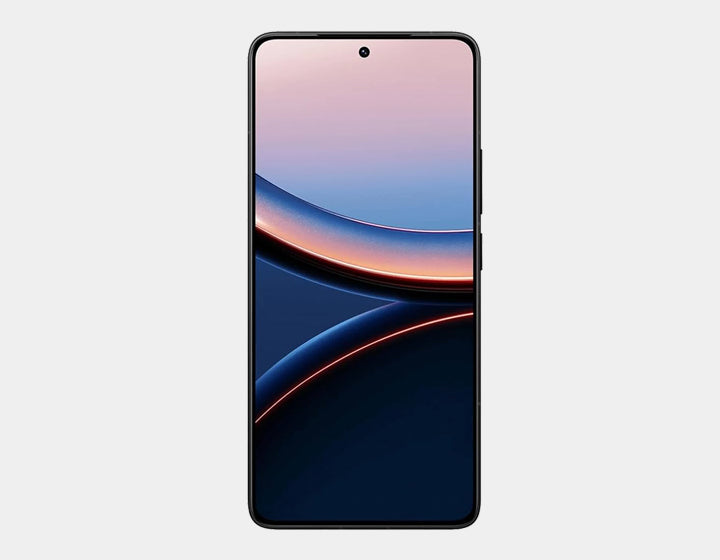
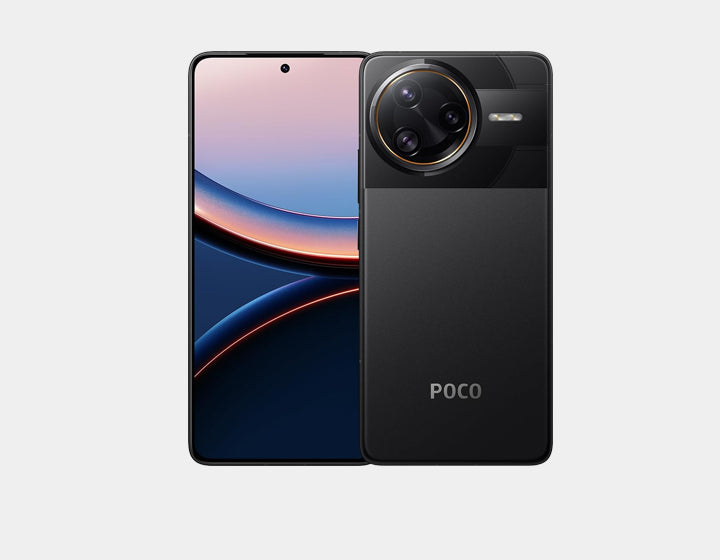
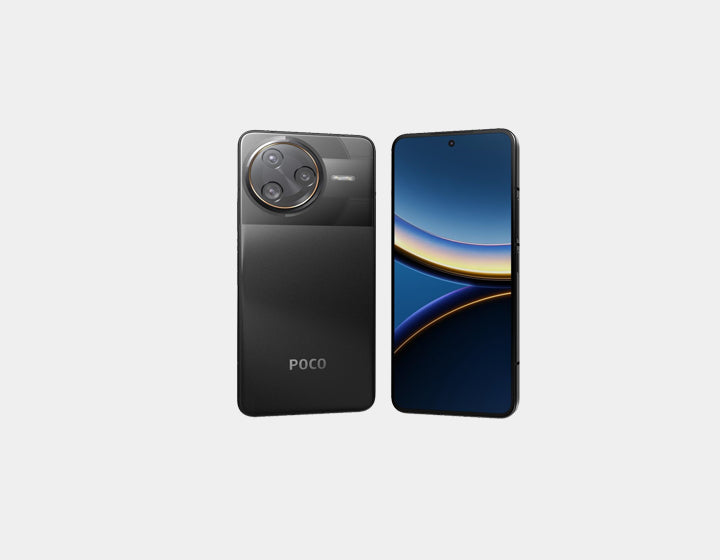
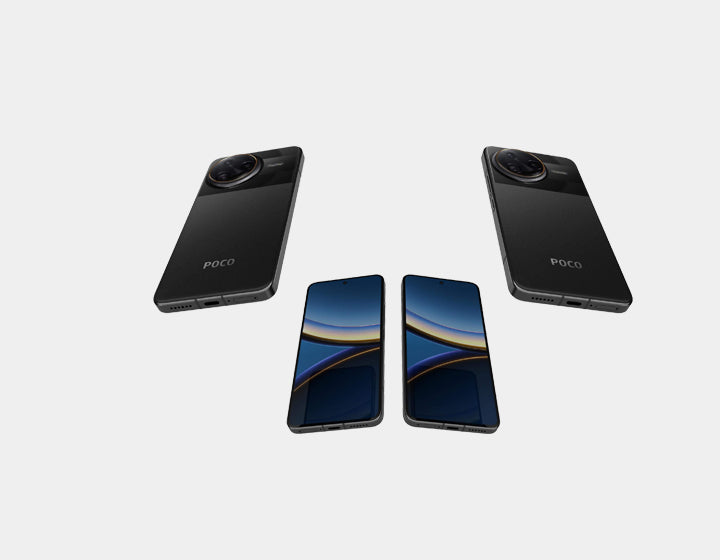
Xiaomi Poco F7 Ultra 5G 256GB ROM 12GB RAM Dual sim GSM Unlocked - Black
Xiaomi Poco F7 Ultra 5G 256GB ROM 12GB RAM Dual sim GSM Unlocked - Black
SKU: SKU:X-POCO-F7ULT-5G-12-256-BK
Out of stock
 Ships Today from New York
📞 Need Help? Call Toll-Free: 1-844-CELLMAX
Couldn't load pickup availability
Free Premium Accessories Included — A $20 Value
Premium accessories included free with every phone purchase.


🛒 Recommended Accessories


-
MYWORLDPHONE CUSTOMER REVIEWS
4.8
OUT OF 5
⭐⭐⭐⭐⭐Based on reviews
Excellent
Why Buy from Us
-

25+ Years of Experience in Business
-

Same-Day Shipping from New York
-

100% Genuine Unlocked Devices
-

Huge Selection of Smartphones
-

Free Shipping


MyWorldPhone.com
POCO F7 Ultra 5G
Elite Performance. Pro Gaming. Black Edition.
Experience ultra-fast performance, smooth visuals, and flagship photography in a sleek black design.
Why POCO F7 Ultra Stands Out
Snapdragon 8 Elite
Flagship 3nm power
VisionBoost D7
Enhanced gaming visuals
2K AMOLED
120Hz ultra-smooth
Fast Charging
120W + 50W wireless
Unmatched Performance
Snapdragon 8 Elite with Oryon CPU delivers lightning-fast speed, efficiency, and seamless multitasking.
Next-Level Gaming
VisionBoost D7 chipset ensures ultra-clear graphics and smooth 120FPS gameplay.
2K 120Hz AMOLED Display
Enjoy ultra-sharp visuals, vibrant colors, and smooth scrolling on a stunning display.
50MP Triple Camera
Capture detailed photos with OIS and a floating telephoto lens for versatile shooting.
All-Day Power
5300mAh battery with ultra-fast wired and wireless charging keeps you going longer.
Premium Build
Glass back, metal frame, and IP68 protection deliver durability and a premium feel.
Unlocked Global 5G
Works with GSM carriers worldwide including T-Mobile, Mint, Tello, and global networks.
Important Compatibility Information
- Compatible with GSM carriers worldwide
- Not compatible with CDMA carriers (Verizon, Sprint)
- Supports 4G LTE and 5G networks (carrier dependent)
- Please confirm compatibility before purchase
Why Buy from MyWorldPhone?
With over 25 years of experience, MyWorldPhone ships from New York with same-day handling and offers a wide selection of unlocked smartphones.
Get the POCO F7 Ultra Today
Shop now at MyWorldPhone.com and enjoy elite flagship performance.
| Network | Technology | GSM / HSPA / LTE / 5G |
|---|---|---|
| 2G bands | GSM 850 / 900 / 1800 / 1900 | |
| 3G bands | HSDPA 800 / 850 / 900 / 1700(AWS) / 2100 | |
| 4G bands | 1, 2, 3, 4, 5, 7, 8, 18, 19, 20, 26, 28, 38, 40, 41, 42, 48, 66 | |
| 5G bands | 1, 2, 3, 5, 7, 8, 20, 26, 28, 38, 40, 41, 48, 66, 77, 78 SA/NSA | |
| Speed | HSPA, LTE, 5G |
| Launch | Announced | 2025, March 27 |
|---|---|---|
| Status | Available. Released 2025, March 27 |
| Body | Dimensions | 160.3 x 75 x 8.4 mm (6.31 x 2.95 x 0.33 in) |
|---|---|---|
| Weight | 212 g (7.48 oz) | |
| Build | Glass front (Shield Glass), glass back, aluminum frame | |
| SIM | Nano-SIM + Nano-SIM | |
| IP68 dust tight and water resistant (immersible up to 2.5m for 30 min) |
| Display | Type | AMOLED, 68B colors, 120Hz, 3840Hz PWM, Dolby Vision, HDR10+, 1800 nits (HBM), 3200 nits (peak) |
|---|---|---|
| Size | 6.67 inches, 107.4 cm2 (~89.3% screen-to-body ratio) | |
| Resolution | 1440 x 3200 pixels, 20:9 ratio (~526 ppi density) | |
| Protection | Poco Shield Glass |
| Platform | OS | Android 15, HyperOS 2 |
|---|---|---|
| Chipset | Qualcomm SM8750-AB Snapdragon 8 Elite (3 nm) | |
| CPU | Octa-core (2x4.32 GHz Oryon V2 Phoenix L + 6x3.53 GHz Oryon V2 Phoenix M) | |
| GPU | Adreno 830 |
| Memory | Card slot | No |
|---|---|---|
| Internal | 256GB 12GB RAM, 512GB 16GB RAM | |
| UFS 4.1 |
| Main Camera | Triple | 50 MP, f/1.6, 24mm (wide), 1/1.55", 1.0µm, multi-directional PDAF, OIS 50 MP, f/2.0, 60mm (telephoto), 1/2.76", 0.64µm, multi-directional PDAF (10cm - ∞), OIS, 2.5x optical zoom 32 MP, f/2.2, 15mm, 120˚ (ultrawide), 1/3.42", 0.64µm |
|---|---|---|
| Features | Color spectrum sensor, LED flash, HDR, panorama | |
| Video | 8K@24fps, 4K@24/30/60fps, 1080p@30/60/120/240/960fps, 720p@1920fps, gyro-EIS |
| Selfie camera | Single | 32 MP, f/2.0, 24mm, (wide), 1/3.42", 0.64µm |
|---|---|---|
| Features | HDR | |
| Video | 1080p@30/60fps, gyro-EIS |
| Sound | Loudspeaker | Yes, with stereo speakers |
|---|---|---|
| 3.5mm jack | No | |
| 24-bit/192kHz Hi-Res & Hi-Res Wireless audio Snapdragon Sound |
| Comms | WLAN | Wi-Fi 802.11 a/b/g/n/ac/6e/7, dual-band, Wi-Fi Direct |
|---|---|---|
| Bluetooth | 6.0, A2DP, LE, aptX HD, aptX Adaptive, aptX Lossless, LHDC 5 | |
| Positioning | GPS (L1+L5), GLONASS (G1), BDS (B1I+B1c+B2a), GALILEO (E1+E5a), QZSS (L1+L5), NavIC (L5) | |
| NFC | Yes | |
| Infrared port | Yes | |
| Radio | No | |
| USB | USB Type-C, OTG |
| Features | Sensors | Fingerprint (under display, ultrasonic), accelerometer, proximity, gyro, compass |
|---|
| Battery | Type | 5300 mAh |
|---|---|---|
| Charging | 120W wired, PD3.0, QC3+, 100% in 34 min 50W wireless |
| Misc | Colors | Black, Yellow |
|---|---|---|
| Models | 24122RKC7G |
| Tests | Performance | AnTuTu: 2580520 (v10) GeekBench: 8887 (v6) 3DMark: 6204 (Wild Life Extreme) |
|---|---|---|
| Display | 1506 nits max brightness (measured) | |
| Loudspeaker | -24.7 LUFS (Very good) |
| Warranty | No Warranty |
|---|
| 1pcs | Xiaomi Poco F7 Ultra 5G |
| 1pcs | Battery. |
| 1pcs | Home Charger. |
| 1pcs | Headphone. |
| 1pcs | Data Cable. |
| 1pcs | User Manual. |
1. Which exact model is this?
This is the POCO F7 Ultra 5G with 12GB RAM, 256GB storage and Black finish.
2. Is Black an official color?
Yes. POCO officially lists Black and Yellow.
3. Is 12GB + 256GB an official configuration?
Yes. The two Global configurations are 12GB+256GB and 16GB+512GB.
4. What RAM technology does it use?
LPDDR5X.
5. What storage technology does it use?
UFS 4.1, with Xiaomi noting that UFS 4.1 support was rolled out by OTA.
6. How much Memory Extension does this exact 12GB/256GB model support?
Xiaomi specifies 4GB, 6GB, 8GB or 12GB Memory Extension for the 12GB+256GB configuration.
7. Does that make it 24GB of physical RAM?
No. It remains 12GB physical LPDDR5X RAM; Memory Extension uses internal storage.
8. Does the 256GB version support UFS Storage Extension?
Yes. Xiaomi specifies 8GB UFS Storage Extension for the 256GB version.
9. Does it support microSD?
No. Expandable storage and SD cards are not supported.
10. Does it support eSIM?
No. Xiaomi explicitly says eSIM is not supported.
Snapdragon 8 Elite
11. Which chipset powers it?
The Snapdragon 8 Elite Mobile Platform.
12. What manufacturing process does it use?
3nm.
13. How many CPU cores are there?
Eight.
14. What CPU architecture does it use?
Qualcomm Oryon.
15. What is the CPU configuration?
2 Prime cores up to 4.32GHz + 6 Performance cores up to 3.53GHz.
16. What is the maximum CPU clock?
Up to 4.32GHz.
17. Which GPU does Xiaomi officially list?
A Qualcomm Adreno GPU.
18. Should the page say Adreno 830?
That designation is associated with Snapdragon 8 Elite, but Xiaomi’s device-specific documentation simply says Adreno GPU. For manufacturer-only copy, I would use Xiaomi’s wording.
19. What AI processor is included?
A Qualcomm Hexagon processor / Qualcomm AI engine.
20. Is it a 64-bit processor?
Yes.
VisionBoost D7 & Gaming
21. What is VisionBoost D7?
It is POCO’s dedicated graphics-boost chipset that works alongside Snapdragon 8 Elite.
22. What process is VisionBoost D7 built on?
POCO markets it as a 12nm graphics chipset.
23. What features does it enable?
POCO promotes 2K Super Resolution, 120FPS Smart Frame Rate and Game HDR in supported software scenarios.
24. Does 120FPS work in every game?
No. POCO qualifies these features by game, software and supported scenario.
25. Does it support WildBoost?
Yes—WildBoost Optimization 4.0.
26. What does WildBoost 4.0 improve?
POCO says it targets CPU/GPU scheduling, rendering, touch responsiveness and gaming audio.
27. What cooling system is used?
LiquidCool Technology 4.0 with a 3D Dual-channel IceLoop system.
28. How large is the cooling system?
Approximately 5400mm².
29. How many temperature sensors are used?
POCO advertises 15 sensors.
30. Does the cooling system completely prevent heat?
No. Gaming, charging, cameras and 5G still generate heat; the cooling system manages it.
2K AMOLED Display
31. How large is the screen?
6.67 inches.
32. Is it flat or curved?
Flat.
33. Why does Xiaomi call it a flexible display?
The AMOLED panel technology itself is flexible, while the actual visible screen is flat.
34. What is the resolution?
3200 × 1440 WQHD+.
35. Does POCO market this as 2K?
Yes.
36. What is the pixel density?
526 PPI.
37. What is the official screen-to-body ratio?
93.69%.
38. What is the maximum refresh rate?
Up to 120Hz.
39. What is the standard touch sampling rate?
Up to 480Hz.
40. What is the maximum instantaneous gaming touch rate?
Up to 2560Hz in Game Turbo.
Brightness, Color & Dimming
41. What is HBM brightness?
Up to 1800 nits.
42. What is local peak brightness?
Up to 3200 nits, specified over approximately 25% of the display area.
43. What is manual brightness?
Xiaomi’s detailed FAQ lists about 600 nits, with Sunlight Mode reaching about 800 nits.
44. What is minimum brightness?
Approximately 2 nits.
45. How many colors does it display?
12-bit / approximately 68.7 billion colors.
46. What is the contrast ratio?
5,000,000:1.
47. Does it support HDR10+?
Yes.
48. Does it support Dolby Vision?
Yes.
49. What dimming method does it use?
DC dimming at higher brightness and PWM at lower brightness, with POCO advertising up to 3840Hz PWM.
50. What protects the display?
POCO’s consumer specification says POCO Shield Glass; Xiaomi’s detailed FAQ calls it Xiaomi Shield Glass 2.0. For retail wording, POCO Shield Glass is appropriate.
Black Design & Durability
51. What are the dimensions?
160.26 × 74.95 × 8.39mm.
52. What is the weight?
212g.
53. Does the Black version use a glass back?
Yes. POCO markets a premium glass back with gloss-matte finish.
54. What does Xiaomi’s technical FAQ call the back-shell material?
Panda-X 2.
55. Does it have a metal frame?
Yes. POCO markets a metal middle-frame construction, and Xiaomi’s FAQ identifies the structural frame materials in more detail.
56. What protects the rear camera lenses?
Corning Gorilla Glass 5.
57. What IP rating does it have?
IP68.
58. What immersion test does POCO publish?
Static freshwater up to 2.5 meters for up to 30 minutes under specified laboratory conditions.
59. Does IP68 mean waterproof?
No. POCO warns that protection applies under controlled test conditions and may deteriorate with wear or damage.
60. Should the phone be charged while wet?
No. POCO’s water-resistance guidance advises against charging when exposed to moisture.
Triple Rear Camera System
61. How many rear cameras does it actually have?
Three rear cameras.
62. What are they?
50MP main + 50MP floating telephoto + 32MP ultrawide.
63. What main sensor does it use?
Light Fusion 800, supplied by OmniVision.
64. What is the main sensor size?
1/1.55 inch.
65. What is the main aperture?
f/1.6.
66. What pixel size does Xiaomi specify?
Approximately 1.008µm native / 2.016µm after 4-in-1, marketed as a 2.0µm Super Pixel.
67. Does the main camera have OIS?
Yes.
68. How many lens elements does the main camera use?
6P.
69. Which telephoto sensor is used?
Samsung S5KJN5.
70. What is the telephoto resolution?
50MP.
Telephoto, Ultrawide & Selfie
71. What is the telephoto focal length?
60mm equivalent.
72. What optical zoom does it provide?
2.5× optical zoom.
73. What is its aperture?
f/2.0.
74. Does the telephoto have OIS?
Yes. Xiaomi specifies OIS + EIS for the telephoto.
75. Can it shoot macro?
Yes. The floating telephoto can focus from approximately 10cm.
76. What is the ultrawide resolution?
32MP.
77. What ultrawide sensor is used?
Samsung S5KKD1.
78. What is the ultrawide field of view?
POCO markets approximately 120°; the detailed FAQ measures 119.4°.
79. What is the front-camera resolution?
32MP. Your upper product field is correct.
80. What is the selfie sensor?
Samsung S5KKD1, 1/3.44", f/2.0, fixed-focus, 0.64µm / 1.28µm 4-in-1.
Video
81. What is the maximum rear-video resolution?
8K at 24fps.
82. Does it support 4K60?
Yes—4K24, 4K30 and 4K60 are supported.
83. Does the main camera have electronic stabilization too?
Yes. Xiaomi specifies OIS + EIS.
84. Does the telephoto use EIS too?
Yes, OIS + EIS.
85. What stabilization does the ultrawide use?
EIS.
86. What is the maximum front-video resolution?
Up to 1080p60.
87. Does it have Director Mode?
Yes.
88. Does it have slow-motion recording?
Yes.
89. Does it support POCO AISP?
Yes. POCO markets its computational-imaging platform combining CPU, GPU, NPU and ISP resources.
90. What dynamic-range claim does POCO publish?
POCO advertises up to 13.2EV for the Light Fusion 800 system under its own test/marketing conditions.
Battery, Charging & Connectivity
91. What is the battery capacity?
5300mAh, single-cell lithium-polymer.
92. What is the maximum wired charging speed?
120W HyperCharge.
93. What full-charge time does POCO claim?
Approximately 34 minutes to 100% under POCO laboratory conditions.
94. Does it support wireless charging?
Yes—up to 50W Wireless HyperCharge.
95. What wireless charging time does POCO publish?
Approximately 75 minutes to 100% under POCO laboratory conditions.
96. Does it support reverse wireless charging?
Yes. Xiaomi confirms the feature but does not specify a wattage in the current technical FAQ.
97. What battery-longevity claim does POCO make?
POCO says the battery is designed to retain at least 80% capacity after 1,600 cycles under its laboratory standard.
98. What Wi-Fi does it support?
Wi-Fi 7 on 2.4GHz and 5GHz. 6GHz is explicitly not supported. It also supports 2×2 MU-MIMO, Wi-Fi Direct and Miracast/Xiaomi Cast.
99. What Bluetooth does it support?
Bluetooth 6.0, with SBC, AAC, aptX, aptX HD, aptX Adaptive, aptX Lossless, LDAC, LHDC, LC3, ASHA and Auracast support documented by Xiaomi.
100. What other major connectivity/features are included?
It has Dual Nano-SIM, no eSIM, VoLTE, VoNR, VoWi-Fi, Dual 5G standby, NFC, IR blaster, dual-frequency GNSS, ultrasonic in-display fingerprint recognition, AI Face Unlock, dual speakers, Snapdragon Sound, Type-C/OTG, external-drive support up to 2TB, no DisplayPort Alt Mode and no wired video output.
Factory-unlocked status does not guarantee activation with every carrier. POCO publishes broad LTE/5G band support, but actual service can still depend on the exact regional model, IMEI eligibility, carrier certification, VoLTE/VoNR/IMS provisioning and current carrier policy.